







Search Results for: stone fruit

How to Taste Fruit Flavors in Coffee? A Roundup of Fruity Coffee Beans from African and South American Origins and Front Street Recommendations
The sweet-and-sour taste and aroma of fruity notes are among the most highly regarded flavor characteristics of specialty coffee. These flavors can be broadly grouped into three major categories: stone fruit, citrus, and berries, with different origins often displaying their own distinctive fruity tendencies. African origins are known for their intense fruitiness, while South American origins tend to present more stone fruit aromas. This article will outline the main origins and their representative flavors, and list Front Street Coffee's recommended beans from Kenya, Ethiopia, Costa Rica, Tanzania, Guatemala, Colombia, and other places, to help coffee lovers understand the tasting direction of fruity coffee more clearly. [more…]

Fruity and Floral Single-Origin Coffee Recommendations | Why Does Hand-Brewed Black Coffee Taste Like Fruit? What's the Difference in Fruity Flavors Between African and South American Coffee Beans?
Fruity coffee fruit flavors often present a natural sweet-and-sour aroma, making them one of the most prized qualities in specialty coffee. They are generally divided into stone fruits (peach, apricot, apple), citrus (orange, lemon, pomelo, sweet orange), and berries (raspberry, strawberry, blackberry, blackcurrant, cherry). Generally speaking, [more…]
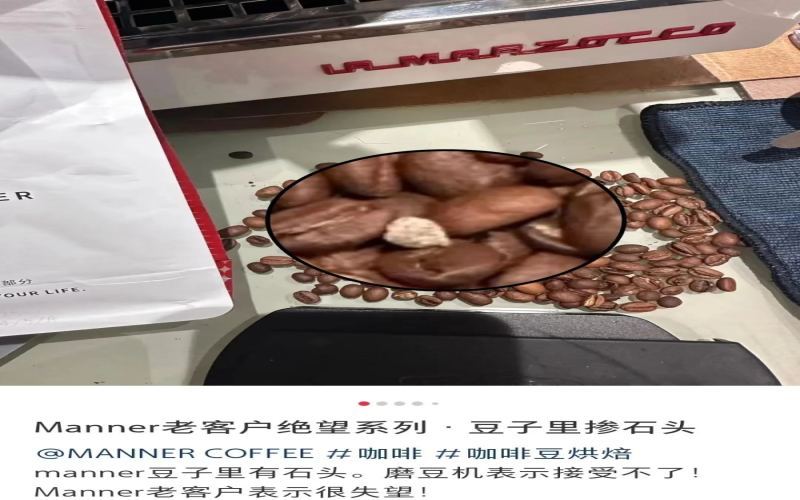
Manner Coffee Beans Found Contaminated with Small Stones Spark Debate: An Analysis of the Brand's Screening Process and Grinder Safety Hazards
Recently, a consumer reported on social media that a small stone was unexpectedly found in the Manner coffee beans they had purchased. Fortunately, they spotted it in time while pouring the beans, preventing it from entering the grinder and causing damage. Although Manner's customer service explained that coffee beans are an agricultural product and defects are inevitable during processing, and emphasized that professional equipment is used to screen out foreign objects during production, this response did not fully satisfy the customer. This incident has also drawn attention among coffee enthusiasts to grinder safety issues—small stones not only affect food safety but can also cause serious damage to the burrs. So, from green beans to roasted beans, how many rounds of screening does coffee actually go through? And how do brands like Front Street Coffee control quality? [more…]
A Comprehensive Analysis of the Flavor Characteristics, Growing Environment, and Processing Methods of Single-Origin Beans from Ethiopia's Kochere Region
Kochere is located southwest of Yirgacheffe in Ethiopia and is one of the most representative specialty coffee sub-regions in the Gedeo Zone. It enjoys the natural advantages of primary forest cover, deep red-brown clay, and high altitude, and its coffee is famous for a delicate flavor profile interwoven with citrus, stone fruit, and tea-like notes. This article systematically reviews Kochere's cultivation history, geographical production conditions, variety characteristics, and washed processing method, and provides detailed introductions to the flavor descriptions and specification information of several Kochere G1 single-origin beans under the Front Street Coffee brand—Debo, Hama, and Godochoa—while also extending to an introduction of the broader pattern of Ethiopia's eight major production regions, offering coffee enthusiasts a complete framework for understanding the region. [more…]
Costa Rica Finca El Gigante Blueberry Coffee: Bruncas Region Terroir, Anaerobic Heavy Honey Processing, and a Cupping Comparison of Three Roast Profiles
Front Street Coffee recently acquired a batch of blueberry coffee beans from Costa Rica's Las Rocas Estate; the green beans exude an intense sweet blueberry aroma and rose floral notes. To fully reveal the flavor potential of these beans, the roaster team designed three different roasting profiles and cupped them one by one, striving to find the most balanced roasting plan that best expresses the terroir. This article will guide you through the terroir background of the Brunca region, the varietal composition and anaerobic heavy honey processing of Las Rocas Estate, and present in detail the roasting parameters of the three profiles and the differences in cup flavors, helping coffee enthusiasts gain a deeper understanding of the charm of these beans. [more…]
Tanzania Kilimanjaro Coffee Bean Flavor Profile and Peaberry Detailed Guide: From Origin to Grading and Brewing Guide
Kilimanjaro coffee comes from the volcanic region of Tanzania, home to Africa's highest peak, and is renowned for its washed processing and distinctive flavor. This article will guide you through the formation of Kilimanjaro Peaberry—a rare single seed resulting from uneven pollination or differences in nutrient distribution, accounting for only 5% to 10% of coffee production. The article also breaks down its complex flavor profile of creamy chocolate, dried plum, citrus acidity, and tea-like stone fruit, and explains how acidity and sweet aftertaste perform under a light roast. In addition, it compiles Tanzania's 8 screen-size grading classifications, as well as the different charms of Kilimanjaro AA in single-origin and blend applications, making it ideal for coffee enthusiasts seeking in-depth knowledge. [more…]
Costa Rica's Las Piedras Estate Black Honey Process Coffee Beans: Variety, Flavor, and Front Street Brewing Analysis
The black honey processed coffee beans from Costa Rica's Giant Stone Estate are a specialty bean that Front Street Coffee has long carried. As the grade of honey processing that retains the most mucilage, black honey processing involves longer fermentation and drying periods, bringing a delicate vinous aroma and rich sweetness, but even a slight lapse in management can easily lead to over-fermentation, making labor costs quite high. Giant Stone Estate is located in the Brunca region of southern Costa Rica, named after the nearby excavated indigenous stone sphere relics, with diverse microclimates. This article will provide a complete analysis of this bean's flavor code and brewing key points, from the estate's background, the characteristics of the Caturra and Catuai varieties, the principles of honey processing, Front Street's roasting curve, and cupping flavors to pour-over parameters. [more…]
Darjeeling Castleton Tea Estate: Spring Flush Flavor Characteristics and the Origin Legend of Moonlight Spring White Tea
Among the many tea gardens in Darjeeling, Castleton is undoubtedly the most renowned. It was personally planted by Dr. Charles Graham in 1885 and is now part of the Goodricke Group, famous worldwide for its Moonlight White tea and first flush tea. The garden spans the slopes of Kurseong and Pankhabari, rising from 980 meters to 2300 meters in altitude. Of its 170 hectares under cultivation, 70% are heritage tea bushes, and it also possesses quality clonal varieties such as AV2 and Seeyok 1240. The high altitude and low-oxygen environment cause the tea to grow slowly, yet it concentrates richer flavors. Front Street Coffee's first 2021 China Red purchased this year comes from here—a first flush at 4,000 feet, with a medium-bodied yet balanced cup, fresh citrus, sweet green notes, and a finish carrying stone fruit and woody aromas. This article will take you into Castleton and savor in detail the aroma, taste, and aftertaste of its first flush tea. [more…]
Costa Rica Las Piedras Estate Blueberry Coffee Beans: Full Analysis of Anaerobic Heavy Honey Processing Flavor and Variety
Costa Rica, with its diverse microclimates and volcanic soils, became one of the first countries in Central America to cultivate coffee. Piedra Grande Estate, located in the Brunca region in the south, takes its name from the indigenous "secret stone spheres" unearthed nearby. At an altitude of 1,400-1,700 meters, the mixed red and gray clay soil gives the coffee high density and excellent sweetness. The estate grows two varieties, Bourbon and Catuai, and employs anaerobic heavy honey processing: first low-temperature anaerobic fermentation, then 20-25 days of raised-bed drying and greenhouse resting, and finally aging the beans to 11% moisture content. Front Street Coffee's Piedra Grande Blueberry coffee presents a flavor profile of rose, blueberry gummy candy, fermented notes, and mint, making it well worth savoring for coffee enthusiasts. [more…]
Tanzania Kilimanjaro Peaberry Pour-Over Guide: Flavor Characteristics, Roasting Points, and Brewing Suggestions
Looking for a coffee bean that's perfect for pour-over and offers layered, complex flavors? Kilimanjaro Peaberry from Tanzania in East Africa is worth your attention. This small-bean coffee, grown in the high-altitude volcanic soil around Africa's highest peak and processed using the washed method, presents creamy chocolate, dried plum, and citrus-like bright acidity, with a tea-like finish and a sweet stone-fruit aftertaste. Peaberries, due to special reasons in pollination or nutrient distribution, account for only 5% to 10% of coffee production. They are oval and compact in shape, heat more evenly during roasting, and are especially suited to a light roast that showcases delicate acidity. This article will guide you through the origin background of Kilimanjaro Peaberry, its biological causes, its flavor profile, and the pour-over experience and roasting suggestions for this bean from Front Street Coffee. [more…]
Panama's Kotowa Family Three Estates: Flavor Stories and Origin Analysis of Geisha Coffee Beans from Kotowa, Don K, and Duncan
On the map of Panama's specialty coffee, the name Kotowa has always been closely linked with exceptional quality. The three estates left by founder Alexander Duncan—Jaramillo, Don K, and Duncan—each possess unique microclimates and terroir, giving rise to distinctly different coffee flavors. From the warm sweetness of Jaramillo, to the sharp acidity and stone fruit notes of Don K, to the delicate honeysuckle-citrus profile of Duncan, each estate tells the legend of the terroir of the Boquete Valley. This article will guide you through an in-depth look at the geographical conditions, processing methods, and flavor characteristics of these three estates, along with selected recommendations from Front Street Coffee, offering professional guidance for your coffee exploration journey. [more…]
Nicaragua Finca La Tormenta Natural Maragogype: Variety Origins, Growing Region Characteristics, and Pour-Over Flavor Analysis
The Maragogype Natural from Nicaragua's Finca La Tormenta is a giant bean variety that has attracted much attention in the specialty coffee world. Starting from a practical pour-over plan, this article provides specific parameters: 15g of coffee, medium grind, 88-89°C water temperature, 1:15 coffee-to-water ratio, and a 2-minute extraction. It also sorts out the botanical origins of Maragogype—originating from Maragogipe County in Bahia, Brazil, established as a classification in 1870, belonging to an Arabica-derived hybrid, with beans reaching more than three times the size of ordinary coffee beans. The article also introduces the distribution of Nicaragua's four major producing regions, the SHG highest grade of the Segovia region, and the body and fragrance brought by volcanic fertile soil and shade growing, and explains in detail the pineapple, winey, stone fruit, caramel, and roasted nut flavor layers of this natural bean from Finca La Tormenta, as well as Front Street Coffee's roasting and product information. [more…]
Panama Firestone Estate Coffee Flavor Analysis: Catuai Variety Characteristics and Front Street Pour-Over Parameters
Panama, as a specialty coffee-producing country, is renowned for the coffee grown in the Boquete region of Chiriquí Province in its west. The honey-processed Catuai from Finca El Fuego, with its complex flavors of lemon, orange, cranberry, and green tea, along with soft floral notes and a lingering sweet finish, has become a favorite among many coffee lovers. This article will guide you through the origins and characteristics of the Catuai variety, outline Panama's main coffee-producing regions, and share Front Street Coffee's pour-over brewing recipe for this bean, covering grind size, water temperature, and pouring rhythm step by step, helping you recreate a clean and smooth Panamanian flavor at home. [more…]
Where Does Coffee's Fruity Aroma Come From? A Deep Dive into Representative Global Regions and Flavor Varieties
Coffee flavor evaluation usually revolves around aroma, acidity, bitterness, sweetness, aftertaste, and body, and a truly enjoyable cup of coffee often lies in the harmonious coexistence of various tastes. In recent years, coffee with fruity notes has become highly popular, as such beans can present rich layers of sweet-and-sour notes on top of a balanced base. Fruit flavors cover multiple categories such as stone fruits, citrus, and berries, and different origins each have their own characteristics due to differences in variety and terroir. African origins are known for bright citrus notes, while South American origins often use them as supporting flavors. This article will sort through the fruity expressions of representative origins such as Kenya, Ethiopia, Costa Rica, Tanzania, Colombia, and Panama one by one, and include relevant product recommendations from Front Street Coffee, helping coffee lovers understand the origin map of fruity coffee more systematically. [more…]
The Art of Balance in Coffee Flavor: An Analysis of the Main Producing Regions and Representative Varieties of Fruity Coffees
An ideal cup of coffee is often not defined by one particularly prominent flavor, but by a harmonious unity among acidity, sweetness, bitterness, aroma, aftertaste, and body—this is what we commonly call balanced flavor. On the foundation of balance, fruity coffee reveals an especially captivating complexity—from stone fruits to citrus to berries, different origins lend coffee their own distinctive fruit notes. African regions are usually known for bright citrus flavors, while South American coffees often use them as a supporting layer. This article will guide you through the flavor composition of fruity coffee and introduce the classic fruit expressions of representative origins such as Kenya, Ethiopia, Costa Rica, Tanzania, Colombia, and Panama, while also presenting the corresponding selected products under the Front Street Coffee brand. [more…]
Coffee Flavor Description and Tasting Methods: How to Identify the Aroma and Taste Layers of Specialty Coffee
Every cup of specialty coffee has its own unique flavor language, from acidity and aroma to aftertaste, forming its taste portrait. This article systematically explains the logic of describing coffee flavor—what vocabulary to use and from which dimensions to evaluate a cup of coffee—and lists common fruit flavor types from producing regions such as Africa and Central and South America, helping you gradually build your taste judgment in daily drinking. At the same time, the article also clarifies common misconceptions such as the relationship between espresso and roast level, guiding you to truly understand coffee through both the channels of smell and taste buds. [more…]
Brazil Santos Coffee Flavor Analysis: A Balanced, Neutral Bean and a Great Entry Point for Single-Origin Coffee
As a representative bean of the world's largest coffee-producing country, Brazil Santos serves as a versatile base for coffee blends thanks to its neutral, smooth taste and moderate acidity, and it is also the go-to choice for many coffee lovers just getting started. After medium roasting, it releases the alluring aroma of stone fruit and cream, with rich oils and a long finish. In this article, Front Street Coffee will guide you through a comprehensive look at this remarkably well-balanced Brazilian coffee bean from multiple angles, including its origin background, flavor characteristics, roasting approach, and processing methods. [more…]
Costa Rica Black Soul Coffee Flavor Interpretation: Las Lajas Estate Natural Process and Pour-Over Parameters Sharing
Alma Negra from Costa Rica's Las Lajas Estate is a coffee produced using an innovative natural process, originating from the Central Valley region at an altitude of 1,300 to 1,500 meters, primarily comprising Caturra and Catuai varieties. This medium-light roast coffee has a delicate fruity fermented aroma, with a sweet and smooth entry, presenting layers of dried berries, black dates, and stone fruits, and a sweet aftertaste. The estate has practiced organic farming since 1990 and became Costa Rica's first organically certified estate in 2000, currently holding USDA, JAS, and NOP certifications. Alma Negra differs from the same estate's Black Pearl, leaning toward a natural dried-fruit molasses profile. Front Street Coffee recommends this bean, and below we will introduce its flavor details, estate background, and pour-over steps and parameters. [more…]
Which estate does Saint Lion coffee bean come from? A full analysis of the flavor of the Hambela Benti Nenqua micro-lot special processing method
Sacred Lion coffee beans have attracted considerable attention from coffee enthusiasts in recent years. Which estate do these beans actually come from? And what makes them so special? The answer points to Ethiopia's Hambela estate, specifically lot 121 produced by the single farm Benti Nenqua. The estate belongs to METAD, and after Aman Adinew, who once held a key position at a Fortune 500 company, took over the family business, he introduced corporate management and SCAA quality standards, equipping it with a farm, processing plant, and coffee laboratory. Green bean traders named it "Sacred Lion" and specifically noted the SLD single-layer slow drying process to distinguish it from other natural Ethiopian beans. The cupping profile presents tropical fruit, citrus, stone fruit, strawberry jam, and a blueberry finish. This article will provide a complete introduction to this micro-lot's origin background, processing method, and flavor characteristics, while retaining relevant recommendations for the Front Street Coffee brand. [more…]
Colombia Santander Region Rodeo Estate Coffee Beans: Flavor Characteristics and Processing Method Analysis
Colombia is known as "green gold," and coffee can be harvested there year-round, with different regions and cultivation methods giving coffee a diverse range of flavor profiles. Santander, as the first province in Colombia to grow coffee, is rarely mentioned, yet its output accounts for about 5% of the country's total. The province's unique geography and climate, along with its semi-forest shade system, create a rich and sweet coffee style. Located in Santander, El Rodeo Estate is run by owner Alfonso and his son Chris. Through controlled harvesting and a two-stage fermentation process, Front Street Santander Coffee brings out cocoa notes and a thick caramel sweetness, along with the alluring flavor of dark stone fruit. This article will take a deeper look at the characteristics of the Santander growing region and the flavor and processing details of El Rodeo Estate's coffee. [more…]